Q&A: Hydrodynamics and energy efficiency improvements
Shipowners are increasingly exploring hydrodynamic efficiency improvements – including Energy Saving Devices (ESDs) and hull-form retrofits – to cut fuel consumption, improve CII performance and strengthen short-term returns on existing tonnage. With fuel prices and emissions pressure rising – and the IMO’s Net Zero Framework delayed by a year – many owners are focused on keeping existing tonnage compliant and economically competitive for as long as possible before committing to new fuels and newbuilds.
When correctly applied, targeted hydrodynamic upgrades can deliver 5-15% propulsion savings, sometimes more, with payback periods measured in months rather than years. At the same time, the performance of such measures is highly vessel-specific. Results depend on geometry, operating profile, propulsion arrangement and historical design constraints, making case-specific CFD analysis and commercial screening essential.
In this 10-question Q&A, Head of R&D Mia Elg, together with Head of Hydrodynamics Matias Niemeläinen and naval architects Juho Suortti and Aki Ruohonen, explain where retrofit potential is typically found, which ESD concepts deliver reliable real-world savings, how projects move from CFD to steel-in-water, how results are validated in service and when it makes commercial sense not to proceed.
The perspective reflects Deltamarin’s holistic approach to hydrodynamic optimisation, where performance is evaluated as part of the vessel’s wider propulsion and operational system – ensuring improvements are technically sound, commercially defensible and well-timed for a fleet in transition.
- Where can shipowners realistically expect to find the biggest hydrodynamic and propulsion efficiency gains on existing vessels?
- What types of hydrodynamic efficiency improvements – including ESDs – actually deliver measurable fuel savings in real operations – and which ones are often oversold?
- How much fuel and emissions reduction can shipowners realistically expect from hydrodynamic retrofits – and what does that mean for ROI?
- How does a vessel’s real operational profile influence whether a retrofit project will succeed or disappoint?
- How does Deltamarin identify and screen retrofit opportunities before clients commit to costly feasibility studies?
- What does a typical Deltamarin hydrodynamic retrofit project look like from first analysis to steel-in-the-water?
- Why do promising theoretical savings sometimes translate into much smaller real-world gains – and how does Deltamarin manage that risk?
- How does Deltamarin verify and validate that hydrodynamic improvements actually perform as predicted after retrofit?
- When does it make commercial sense not to proceed with a technically successful hydrodynamic retrofit?
- How is hydrodynamic optimisation evolving – and what will multi-condition, automatic optimisation mean for future vessel design and retrofit work?
1. Where can shipowners realistically expect to find the biggest hydrodynamic and propulsion efficiency gains on existing vessels?
Propulsion is by far the largest single energy consumer on most ship types, which is why hydrodynamic optimisation often offers one of the most powerful levers for reducing fuel consumption and emissions on existing tonnage. However, the improvement potential varies significantly from vessel to vessel and cannot be generalised without careful analysis.
One of the most important indicators is ship age. Vessels designed several decades ago typically offer greater optimisation potential than more recent newbuilds. This is not because they were poorly designed at the time, but because the design tools available for hydrodynamic analysis were far less advanced, and design priorities were often focused elsewhere. Modern CFD (Computational Fluid Dynamics)-based methods can now reveal inefficiencies that were simply not visible during the original design process.
Another critical factor is the difference between design conditions and real operating conditions. Many ships today operate at significantly lower speeds, different drafts or with different loading patterns than originally intended. When the original design speed and today’s operational profile diverge, there is often substantial latent potential for efficiency improvements.
Hull form and ship type also play a major role. Slender ships with relatively low block coefficients and higher operating speeds often benefit most from changes to the fore or aft hull geometry. (The block coefficient is a simple measure of how “full” or “boxy” a hull is, comparing the ship’s underwater volume to a simple rectangular box of the same length, width and draught.) In contrast, full-bodied vessels such as bulk carriers and tankers, with high block coefficients, tend to offer smaller overall savings from hull-shape changes and are instead better candidates for ESDs acting on the propeller and rudder.
Finally, historical dimensional constraints can open new opportunities. Some vessels were originally designed to meet strict length or draft limitations in specific ports or routes. If those constraints no longer apply due to changes in trading patterns, the vessel may suddenly become a candidate for meaningful hydrodynamic improvements.
In practice, the largest gains are typically found where several of these factors coincide: older ships operating far from their original design point and originally designed under tight dimensional or technological constraints.
2. What types of hydrodynamic efficiency improvements – including ESDs – actually deliver measurable fuel savings in real operations – and which ones are often oversold?
A broad range of hydrodynamic efficiency improvements – including ESDs and hydrodynamic hull modifications – are available on the market today, but their effectiveness depends heavily on vessel type, hull form and operational profile. There is no universal solution that works equally well across all ship categories, and performance claims must always be assessed in the context of the full propulsion and resistance picture.
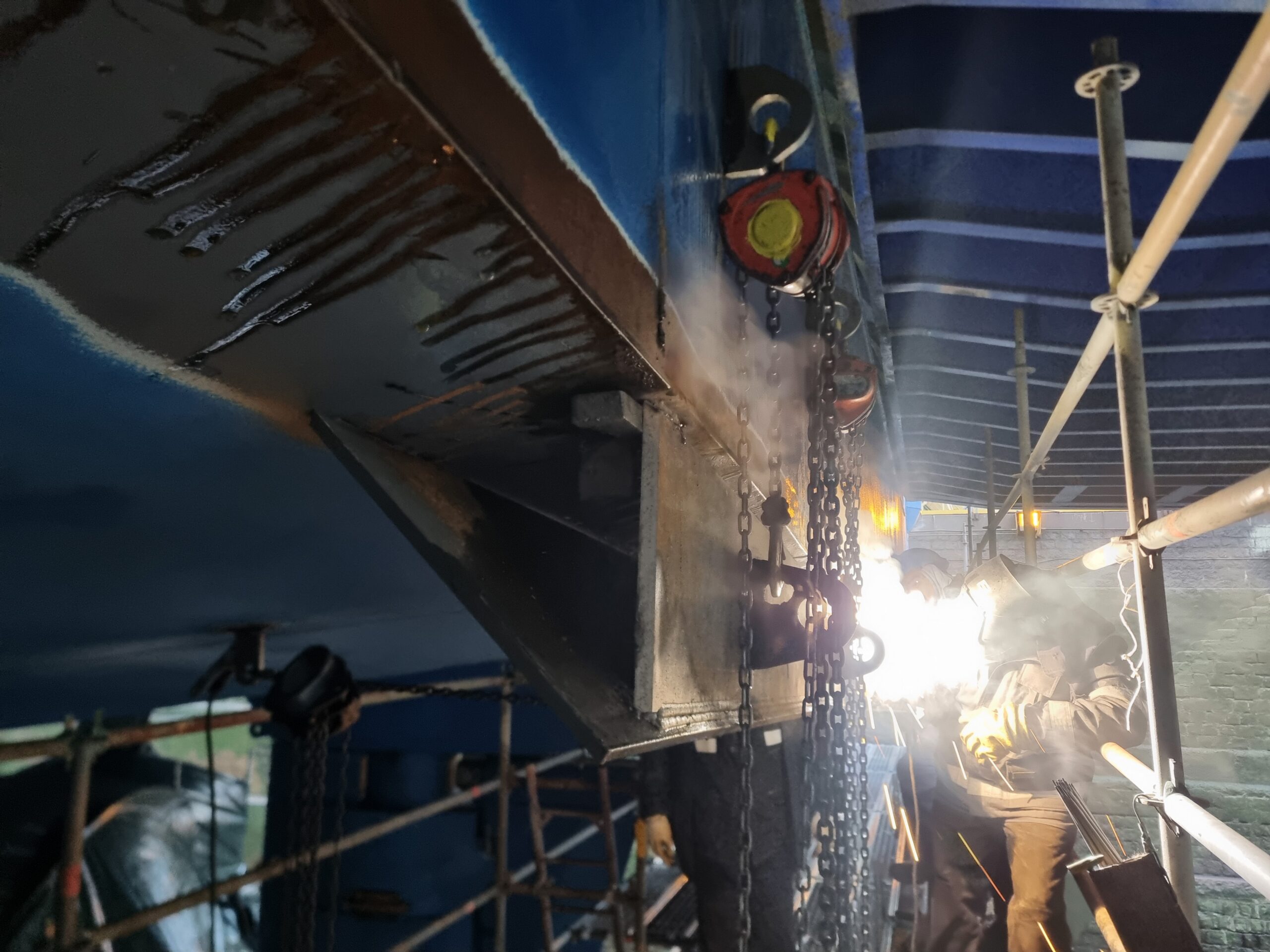
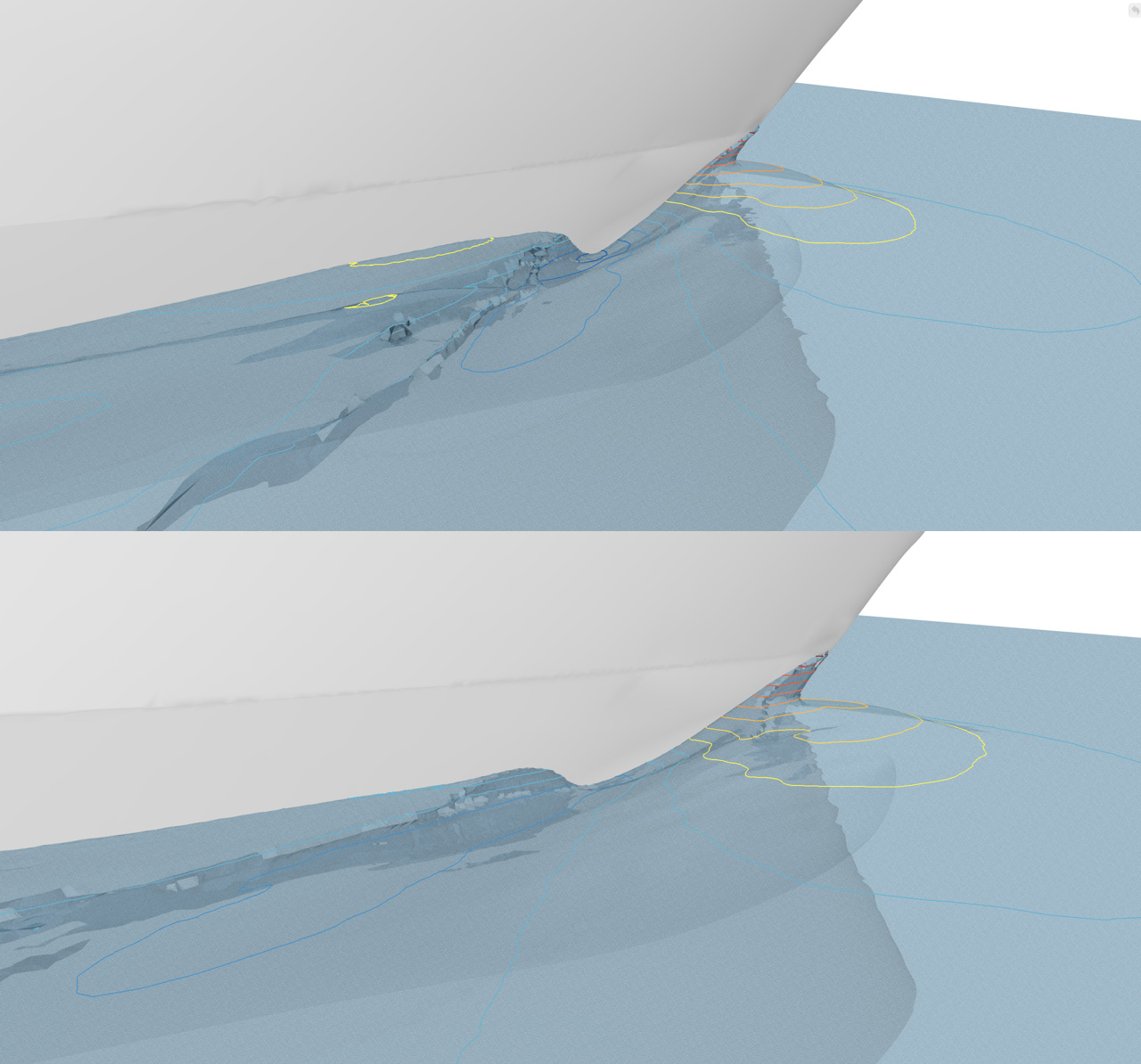
Interceptors and trim wedges are among the most widely applied retrofit solutions, particularly on Ro-pax vessels and other relatively high-speed ships. In suitable applications, they typically deliver fuel savings in the range of 5-15%. However, their effectiveness drops significantly on low-speed, full-bodied vessels such as bulk carriers, where stern flow conditions are fundamentally different. Interceptors have proven especially effective on vessels that were originally too short from a hydrodynamic point of view. Figure 1 illustrates a typical trim wedge design designed for a new-build Ro-Pax vessel.
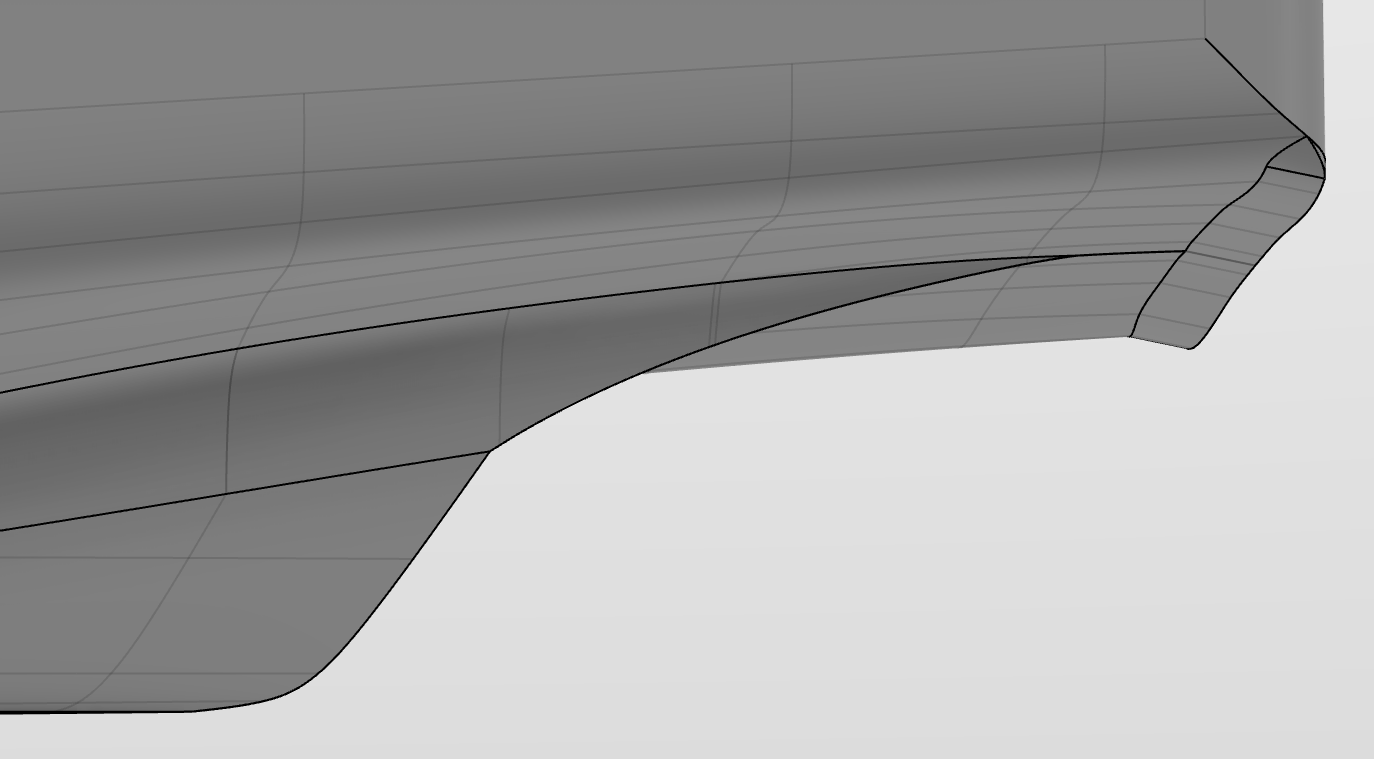
Bulbous bow modifications can provide notable resistance reductions when the hull form and operating profile suit the concept. They are most effective for vessels designed for moderate to high speeds but currently operating at reduced speeds, where an optimised bulbous bow can refine the bow‑wave interaction and lower wave‑making resistance. These upgrades become particularly attractive when earlier dimensional constraints no longer limit the achievable geometry. One such case is illustrated in Figure 1, where the performance of Ro-Pax vessel was improved drastically with a smaller bulbous bow.
Ducktail extensions can yield meaningful benefits by improving stern flow and, in some cases, stability. Unlike bulbous bow modifications, ducktails enhance performance across a broader speed range by extending the hydrodynamic hull and reducing transom wave generation. Ducktails almost always increase the overall length of the vessel and as such are not always applicable.
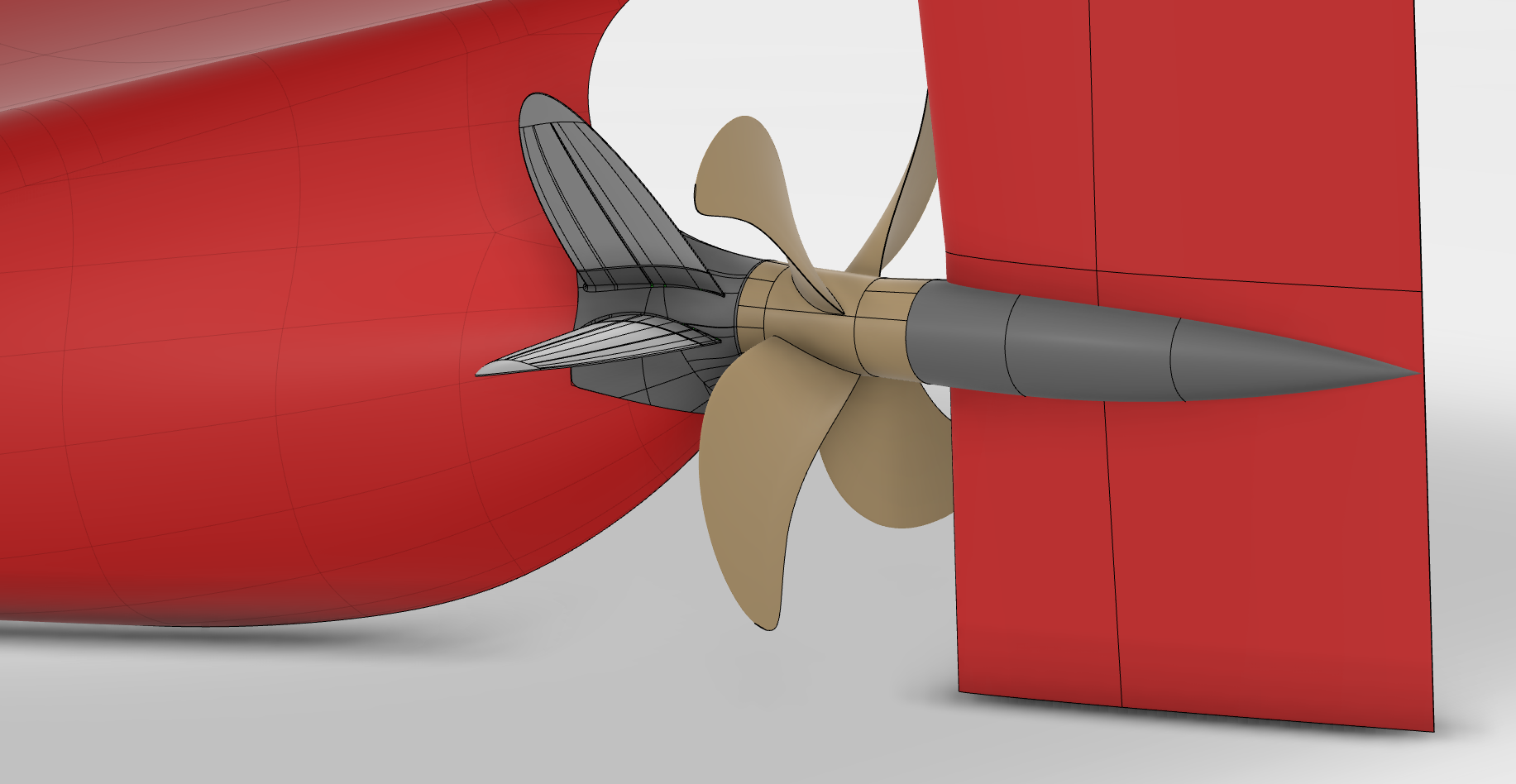
Pre-swirl stators, ducts and other wake-equalising devices, including concepts such as Mewis-type ducts, can be effective in specific propulsion configurations by improving the inflow conditions to the propeller. Their performance is highly dependent on interaction between hull, propeller and rudder, and they are rarely implemented successfully as generic, stand-alone retrofits. In practice, these devices must be evaluated case by case, typically in close cooperation with propulsion specialists. A typical two-bladed pre-swirl stator is presented in Figure 3.
Propeller retrofits are another area of strong market interest. While at Deltamarin we don’t design propellers ourselves, hydrodynamic projects frequently include our independent assessment of whether the promised performance improvements from a propeller change are realistic for a given vessel and operating profile. In many cases, the interaction between propeller changes and other ESDs or hull modifications is as important as the propeller itself.
Beyond propulsion efficiency alone, wave-making is also a critical hydrodynamic dimension in certain operating areas. For vessels operating in archipelagos, shallow waters or environmentally sensitive coastal zones, excessive wave generation can lead to shoreline erosion, regulatory fines or even operating restrictions. Deltamarin has developed CFD-based wave-energy analysis methods that model wave generation and shore effects in complex shallow-water environments. In such cases, specific hull and appendage modifications may be applied primarily to reduce wave impact, with efficiency benefits often following as a secondary gain.
Owners also increasingly invest in hull fouling prevention and mitigation technologies, such as advanced coatings, hull-cleaning robots and ultrasonic systems. While these are not ESDs per se, they have a direct impact on a vessel’s total resistance and therefore on fuel consumption. In hydrodynamic studies, we consider these measures as part of the overall resistance baseline, ensuring that the combined effect of fouling control, ESDs and/or hull modifications is assessed realistically.
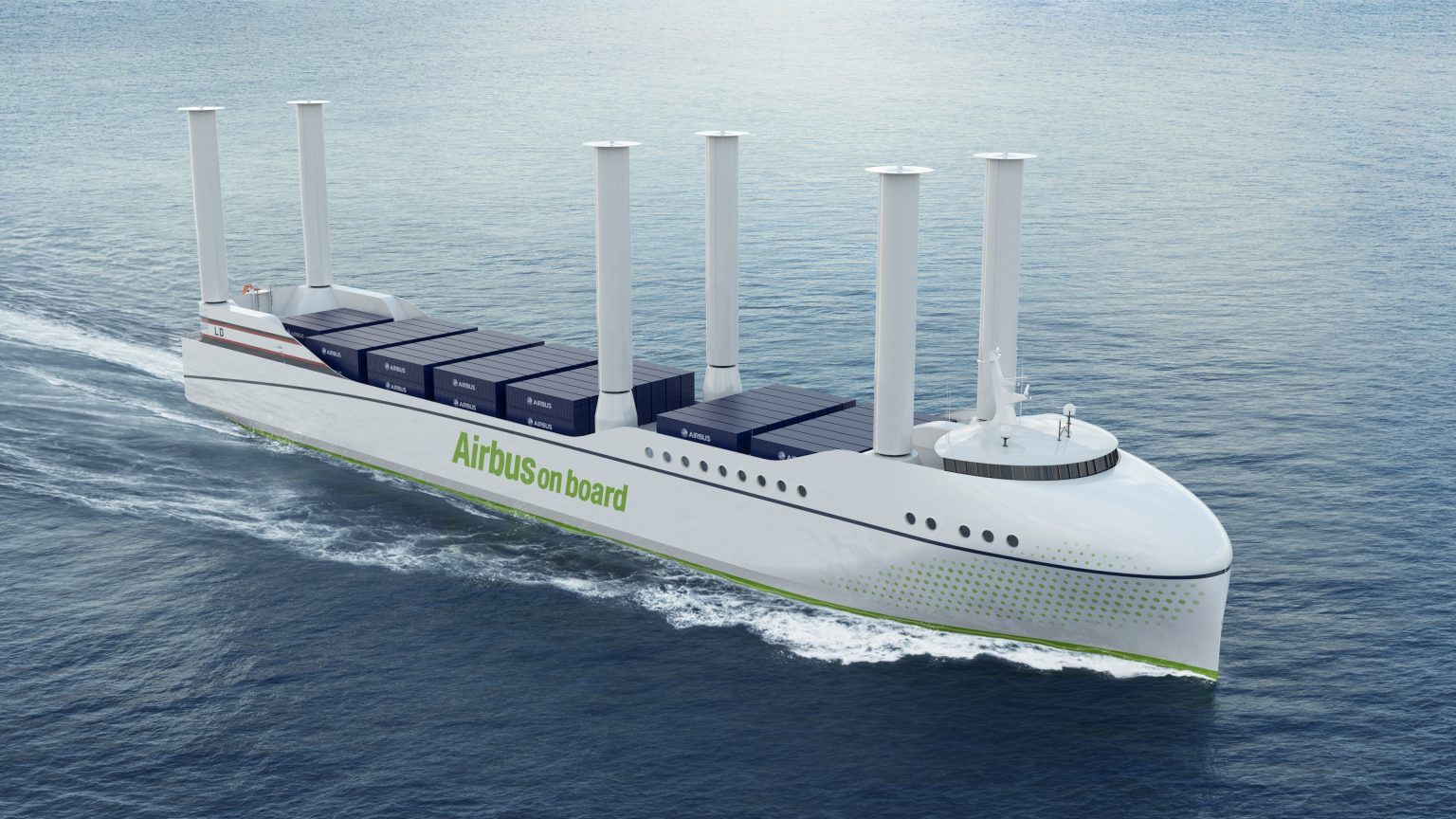
Wind-assisted propulsion, in the form of sails or rotor systems, is gradually re-entering commercial shipping. As a retrofit solution, wind assistance typically delivers 5-20% fuel savings, although much higher reductions are theoretically possible under favourable wind conditions. However, true wind-driven ship concepts require fundamental changes to hull form and overall vessel design. Deltamarin’s capabilities in wind‑assisted propulsion are exemplified by the new Ro‑Ro vessel designed for Louis Dreyfus Armateurs, featuring six Flettner rotor sails as illustrated by Figure 1.
Finally, aerodynamic optimisation of superstructures can also reduce total resistance by several percentage points. While this is most often applied at the newbuild stage, targeted retrofit solutions such as windshields can, in certain cases, be optimised for existing vessels. These studies are increasingly linked with exhaust gas dispersion analysis, for example when scrubbers or new fuels alter exhaust flow patterns and passenger comfort must be safeguarded.
In practice, hydrodynamic efficiency measures are neither silver bullets nor universally applicable technologies. Their commercial value lies in careful matching between device, hull geometry, propulsion system and real operating conditions, and in assessing how different measures interact rather than evaluating them in isolation.
3. How much fuel and emissions reduction can shipowners realistically expect from hydrodynamic retrofits – and what does that mean for ROI?
In real-world retrofit projects, hydrodynamic improvements typically deliver fuel savings starting from around 5%, with several cases reaching 10% or more when the vessel and operating profile are well suited to the chosen solution. Importantly, these reductions translate directly into lower emissions and operating costs.
In one particularly illustrative case, a relatively modest structural modification involving the addition of approximately one tonne of steel resulted in an average 6% in propulsion savings during normal operation. In another project, the total fuel saving impact reached 10%, even though the modification itself was relatively minor. In such cases, the investments paid back in a matter of months.
There are also striking examples of how operational context can amplify measured savings. In one ballast-condition optimisation case on a PCTC vessel, hydrodynamic improvements delivered fuel reductions of around 20% in ballast condition, even though no measurable gains were observed in the design condition. This underlines the importance of evaluating savings against real operating profiles rather than relying solely on nominal design points.
However, not all technically promising projects translate into attractive business cases. In one bulbous bow optimisation study, the predicted savings were commercially interesting, but the vessel was nearing retirement. As a result, the owner chose not to proceed despite the technical merits of the solution.
In general, ROI is highly case-specific, shaped by fuel prices, remaining vessel lifetime, retrofit complexity and shipyard costs. With ever‑tighter emission regulations, such as the EU’s FuelEU Maritime framework – which imposes escalating financial penalties on ships that exceed GHG‑intensity limits – efficiency‑improving retrofits become increasingly attractive as shipowners must account for a regulatory cost pressure on top of simple fuel savings.
That said, several documented cases have demonstrated exceptionally short payback periods, sometimes measured in weeks rather than years. When the right solution is applied to the right vessel, hydrodynamic retrofits can be among the most financially attractive decarbonisation measures available to shipowners today.
4. How does a vessel’s real operational profile influence whether a retrofit project will succeed or disappoint?
The real operational profile of a vessel is often the single most decisive factor in determining whether a hydrodynamic retrofit using ESDs and/or hull modifications will deliver meaningful fuel savings or fall short of expectations. Many ships today operate under conditions that differ substantially from those assumed during their original design. Changes in trading patterns, cargo profiles, speed requirements and draughts can all shift the operating point away from the design optimum, directly affecting how interceptors, bulbs, ducktails or stern modifications perform in practice.
A common pitfall in energy optimisation projects is relying on single-point design conditions when evaluating performance. If a vessel spends most of its time operating at speeds or draughts far from the original design point, a device optimised for that condition may deliver only marginal benefits in practice. Conversely, a solution that appears modest on paper under design conditions can deliver surprisingly strong real-world gains when evaluated across the vessel’s actual operational profile.
A clear example of this effect can be seen in optimisation work carried out for ballast conditions. In one documented case involving a PCTC vessel, no measurable improvement was observed at the design condition. However, when the vessel’s real ballast operating profile was analysed, fuel savings of approximately 20% were identified. Without a multi-condition, energy efficiency-focused hydrodynamic analysis, this opportunity would have remained invisible.
This is precisely why CFD-based, multi-point analysis of ESD and/or hull modifications is essential for credible retrofit investment decisions. By simulating the vessel at several representative speeds, draughts and trims, it becomes possible to capture how hydrodynamic retrofit performance changes across the full operational envelope rather than at a single theoretical point.
5. How does Deltamarin identify and screen retrofit opportunities before clients commit to costly feasibility studies?
Before launching into detailed CFD studies on ESDs or hydrodynamic hull modifications, we typically carry out an initial screening phase designed to assess whether a vessel is likely to offer meaningful retrofit potential. This early-stage evaluation allows shipowners to gain directional insight without committing to a full feasibility project upfront.
The screening process starts with a review of several key hydrodynamic and geometric markers that are known to influence solution effectiveness. These include the age of the vessel, its main dimensions, known historical design constraints and the relationship between the original design conditions and today’s operating profile. Vessels that were originally designed under strict dimensional limitations, for example, may become strong candidates for interceptor, stern or bulbous bow modifications if those constraints no longer apply on current trading routes.
This assessment is typically carried out within Deltamarin’s own hydrodynamics and naval architecture team, drawing on direct experience from previous optimisation retrofit and newbuild projects across multiple vessel types. Based on this internal review, we then engage with the client in an early-stage technical discussion focused specifically on whether ESDs and/or hydrodynamic hull modification is likely to be both technically and commercially viable for that vessel.
In some cases, value can also be created without any physical modification at all. For example, a trim optimisation study can be conducted quickly and provide a practical way to improve operational efficiency without changing anything in the hull form, offering owners a fast, low-risk route to measurable savings.
A key outcome of this phase is the recognition that each vessel is individual. There is no standard energy optimisation solution that can be applied across a fleet. The same device or hull modification can produce double-digit savings on one ship and negligible gains on another that appears similar on paper. This structured screening approach helps clients focus engineering resources where the probability of commercial success is highest.
6. What does a typical Deltamarin hydrodynamic retrofit project look like from first analysis to steel-in-the-water?
Hydrodynamic retrofit projects focused on ESDs and hull form modifications at Deltamarin are typically executed in two structured stages, designed to balance early decision support with detailed technical optimisation.
The first stage is a hydrodynamic feasibility analysis of selected ESD or hull modification concepts. At this point, various retrofit options – such as interceptors, bulbs, ducktails or stern modifications – are evaluated using initial CFD simulations of the vessel’s hull form. The focus is typically on a limited number of representative operating points defined by speed, draught and trim. The objective is to identify which hydrodynamic concepts offer meaningful resistance or propulsion-efficiency improvements for the vessel’s actual operating profile.
Once a viable ESD or hull modification concept has been identified, the project moves into the second stage of detailed hydrodynamic optimisation and structural design. Here, the selected solution is refined through more extensive CFD analysis across a wider operational envelope. Based on the final optimised geometry, Deltamarin prepares the steel drawings for the ESD or hull modification area, supporting direct implementation at the shipyard.
To perform these studies, a 3D hull model suitable for ESD-specific CFD analysis is required. If Deltamarin has originally designed the vessel, this model is already available. In other cases, the hull can be recreated from NAPA models, ship line drawings or 3D scanning of the physical hull. In most of these cases, the hull model processing takes between a few hours to several days to prepare for the CFD study. Advances in software have significantly reduced the pre-processing time required.
In parallel with classical resistance and propulsion studies, we also apply specialised CFD disciplines when required, including:
- Sloshing simulations for tank behaviour
- Flow dispersion and ventilation modelling
- Specialised local flow studies for complex retrofit geometries
These tools are increasingly relevant as ships integrate new fuels, new exhaust systems and more complex safety requirements alongside hydrodynamic upgrades.
7. Why do promising theoretical savings sometimes translate into much smaller real-world gains – and how does Deltamarin manage that risk?
One of the persistent challenges in hydrodynamic optimisation is the gap that can arise between theoretical performance gains and real-world operational results. Even when a device such as an interceptor or hull modification such as a bulbous bow looks highly promising in early calculations, actual fuel savings in service can sometimes be significantly lower – and occasionally higher – than expected. This uncertainty is precisely why intuition alone is not a reliable basis for retrofit decisions.
In practical retrofit project experience, both outcomes have been observed. In some cases, ESD solutions initially expected to deliver only moderate improvements have ended up producing close to 10% fuel savings once installed and validated in operation. In other cases, bulbous bow or stern designs that appeared capable of delivering more than 10% savings under certain simulated conditions have translated into much more modest gains when assessed across the vessel’s full operational profile.
Another important factor is the inherent limitation of modelling tools. While modern CFD methods have become extremely powerful, no simulation can capture every aspect of real ship operation with complete accuracy. As CFD is increasingly applied to more complex flow phenomena and operating scenarios, it is possible that results can sometimes differ from real-world performance. Similar differences are also well known between CFD predictions and traditional model testing. For this reason, simulation results should always be interpreted as informed predictions rather than exact forecasts.
The root of this variability lies in the complex interaction between hydrodynamics and the wider propulsion system. While ESDs and hull modifications, as well as operating speed, draught, trim and environmental conditions, influence resistance and propulsion efficiency, fuel consumption is ultimately determined by how the ship’s machinery converts required propulsion power into fuel burn. Factors such as main engine efficiency, operating load range, propulsion train losses and auxiliary power demand all influence the final outcome. As a result, reductions in hydrodynamic resistance do not always translate directly into fuel savings.
A single design condition therefore cannot fully represent the performance of a vessel that operates across multiple load cases and speeds. Deltamarin manages this risk by placing strong emphasis on CFD-based validation across multiple operating points, explicitly focused on ESD and hull modification performance rather than relying on a single reference condition. Shipowners can greatly benefit their own business case by supplying detailed operational data to Deltamarin for analysis and determination of matrix of representative operational conditions.
Where hydrodynamic optimisation forms part of a broader ship energy efficiency study, Deltamarin also models the vessel’s energy production and consumption in more detail. This allows the impact of hydrodynamic improvements to be evaluated in combination with machinery efficiency and other energy-saving measures, resulting in more accurate fuel-saving predictions. Even in projects that are primarily hydrodynamics-focused, our energy specialists support the work by analysing operational data to identify relevant operating points and to translate hydrodynamic gains into realistic, system-level fuel consumption outcomes.
This approach significantly reduces the likelihood of unpleasant surprises after installation and ensures that retrofit decisions are based on the best possible representation of real operating behaviour.
8. How does Deltamarin verify and validate that hydrodynamic improvements actually perform as predicted after retrofit?
For ESD and hydrodynamic hull modification projects, it is essential that predicted fuel savings are not only simulated but also verified against real operational data after installation. Deltamarin places strong emphasis on this post-retrofit validation phase as part of its optimisation project methodology, recognising that even advanced CFD simulations cannot capture every operational variable with complete precision.
In recent retrofit projects, Deltamarin has received measurement data from vessels both before and after the hydrodynamic modification, enabling direct performance comparison. Importantly, these comparisons take into account baseline factors such as hull fouling condition, which can otherwise distort the interpretation of the results. By normalising for such effects, it becomes possible to isolate the true impact of the ESD or hull modification itself.
Where ESD-driven fuel savings exceed approximately 5%, the improvement is often noticeable even at crew level, with reduced required power at constant speed. However, formal data validation remains essential both for internal technical learning and for providing external credibility to owners, charterers and other stakeholders.
These real-world measurements have repeatedly shown that, when properly analysed and implemented, Deltamarin’s CFD-based performance predictions have been highly accurate. This continuous feedback between simulation and operation strengthens future projects by refining modelling assumptions and improving confidence in predicted outcomes across different ship types.
9. When does it make commercial sense not to proceed with a technically successful hydrodynamic retrofit?
Not every technically successful ESD or hull modification project leads to a commercially sound investment. While CFD studies may demonstrate attractive fuel-saving potential, the final decision must always be based on a broader assessment of economic, regulatory and practical constraints.
One of the most decisive factors is the remaining operational lifetime of the vessel. Even when a bulbous bow or interceptor retrofit shows strong predicted savings, the investment may not be justified if the vessel is approaching retirement. This was the case in one documented bulbous bow study where approximately 10% fuel savings were identified, but as a strategic partner we advised the owner not to proceed due to the vessel’s limited remaining service life.
Fuel prices and regulatory developments also play a major role. The business case for ESD and/or hull-form retrofit is naturally stronger during periods of high fuel prices and tightening emissions regulation. Conversely, lower fuel prices or regulatory uncertainty can significantly extend payback periods.
Finally, yard limitations, structural impacts and retrofit complexity must be factored in. Some ESD or hull modifications require extensive steel work, long offhire periods or specialised yard capabilities that materially weaken the business case. In such cases, even technically strong hydrodynamic solutions may become commercially unattractive.
For this reason, Deltamarin’s role is not only to identify ESD-driven hydrodynamic improvement potential, but also to support owners in making robust commercial go/no-go decisions based on the full investment picture.
10. How is hydrodynamic optimisation evolving – and what will multi-condition, automatic optimisation mean for future vessel design and retrofit work?
Hydrodynamic optimisation is moving beyond single-design-point analysis toward approaches that reflect how ships actually operate across different speeds, draughts and loading conditions. This shift is particularly important for ESD design, wave-making control and complex retrofit work, where performance is highly sensitive to real operating conditions rather than idealised design assumptions.
To address this, Deltamarin is developing parametric optimisation tools – meaning the key aspects of the hull shape and ESD geometry are defined as adjustable parameters that can be varied systematically and automatically. In practical terms, this allows the design team to test a large number of geometric alternatives across a wide range of operating conditions, rather than tuning a solution for just one fixed design point. The benefit is greater confidence that the final solution will perform reliably in real service, not just on paper.
In practice, this means that devices such as interceptors, stern modifications or bulbous bows can be optimised not only for resistance at one speed, but also with regard to:
- Wave-making behaviour in shallow water
- Wind resistance and aerodynamic loads
- Exhaust flow dispersion
- Local flow stability around appendages
This evolution has clear implications for both newbuild design and retrofit screening. In early-stage design, it allows energy-efficient hulls and ESD arrangements to be matched more closely to the vessel’s intended trade. For retrofit projects, it strengthens investment decisions by identifying which ESD solutions deliver stable savings and environmental performance across the vessel’s actual operating profile.
As these tools mature, they will shorten optimisation cycles and improve consistency between projects. Combined with Deltamarin’s growing database of validated retrofit and wave-making results, this tighter link between simulation and real-world performance will make hydrodynamic improvements more predictable, more targeted and more commercially reliable for shipowners.
Looking for perspectives on other industry topics? Discover our other Q&A articles.
For more information, please contact